
How Transport Fever 3 pays for cargo: distance, speed, complexity, and on-time delivery windows that decide profit per load.
Transport Fever 3 Cargo Payment: Why Does the Same Load Pay Differently?
Quick answer: each delivery pays based on distance, the speed and rate behind the trip, the complexity of the cargo, and whether it arrives inside its delivery window. Two identical loads earn different money when one rides a fast direct line and the other crawls through delays. Exact formulas are unverified until launch, but every factor below is confirmed by official material.
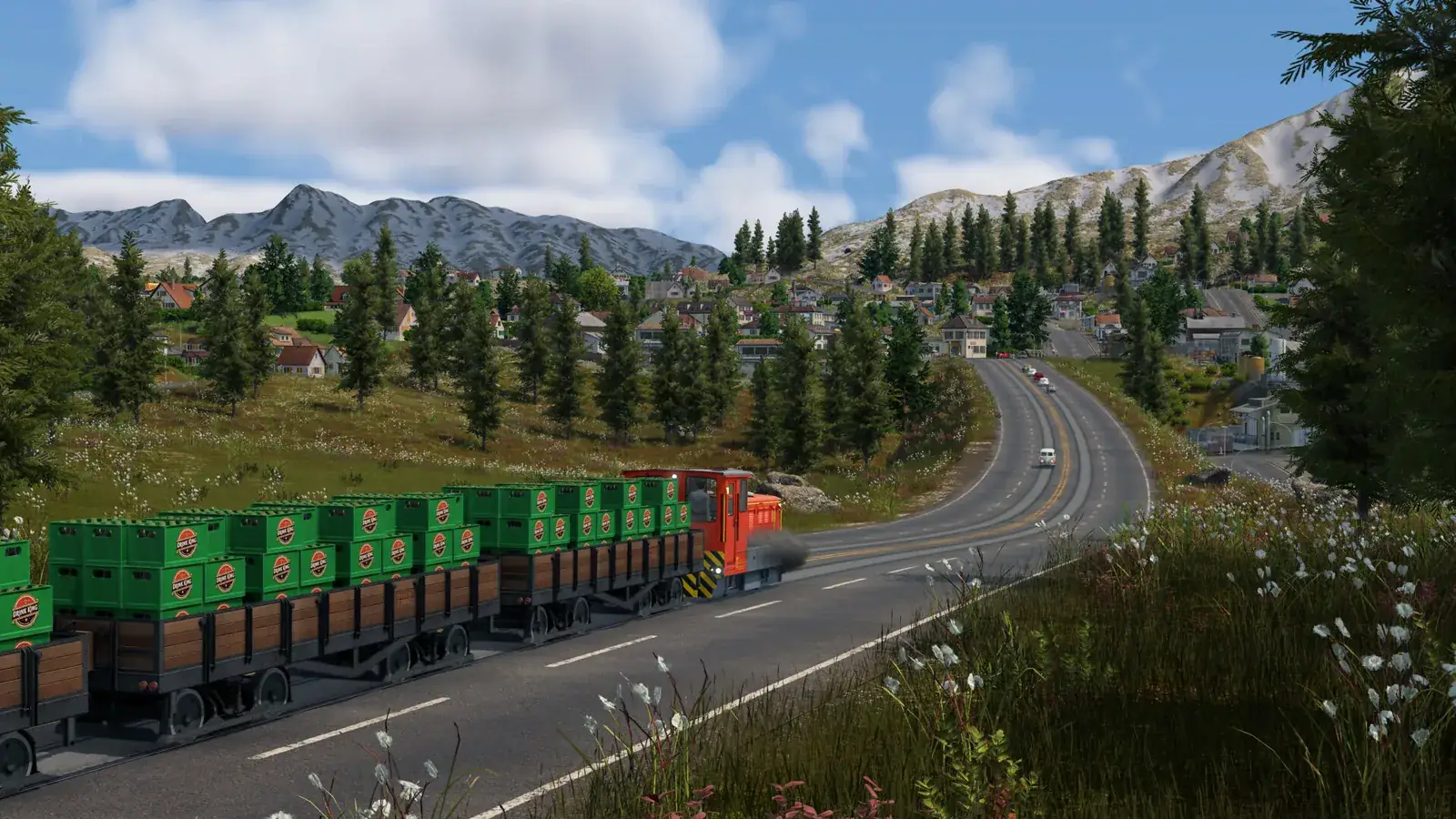
The Four Factors Behind Every Payment
The sharpest official statement on payment comes from the developers themselves: in the comments of the Episode 4 developer diary, the team states that cargo payment keys off complexity rather than distance, while passenger fares key off speed and distance. That single sentence reframes the whole economy — for freight, what you haul matters more than how far you haul it, and finished goods refined through multi-step chains out-earn raw bulk because the economy rewards processing work. For passengers, fast service over real distances is the money.
Official source: Dev Blog Episode 4: Tycoon (developer comments) — cargo payment depends on complexity, not distance; passenger payment depends on speed and distance.
Previews fill in the remaining pieces without contradicting that core. Punctuality gates both income and town growth: short windows for food and fashion-style goods, long patience for coal and stone, with late arrivals earning less and dragging development down. Distance still shapes trip economics through turnaround — a short shuttle collects many payments per year while a slow cross-map line collects few — but per the developers it is not the cargo price driver. Treat any page quoting exact per-unit math before launch as guessing: no official source has published the new formula.
Official source: Industries and Cargo revealed — delivery times matter, delays negatively affect city development, and production rises when industries receive workers and optional inputs.
Older games in the series used a published distance-based payment formula that the community dissected for years. Do not import it — Transport Fever 3 rebuilds cargo simulation with full loading control, redesigned rates, and delivery windows, and the developers price cargo on complexity instead. What follows is confirmed structure plus honest uncertainty, which beats false precision every time.
Treat every numeric claim about payment in pre-release coverage — including on this page — as unverified until the release build is measured. The factors and their directions are confirmed. The coefficients are not. After launch, this page gets real tables.
Delivery Windows: Fast Goods, Patient Bulk
The most actionable confirmed mechanic is the delivery window. Cargo types forgive delays differently: food and fashion-style goods want speed, with short patience and real consequences for lateness, while coal, stone, and similar bulk tolerate slow, cheap transport. Towns count punctual delivery among their core demands, so late fashion goods do not just pay less — they stall the growth of the customer you serve.
This splits your network design in two. Run short-window cargo on fast, direct, reliable lines with spare capacity, and let long-window bulk ride the cheapest rails and slowest ships you own. Mixing them — urgent food stuck behind bulk on a congested single track — is how players pay premium costs for discount revenue. Where chains get long, warehouses and terminals let fast and slow segments run at their own rhythms instead of dragging each other down.
| Cargo style | Window behavior | Belongs on |
|---|---|---|
| Food and perishables | Short patience, lateness hurts town growth | Fast direct routes with spare capacity |
| Fashion and finished goods | Timely delivery demanded, complexity premium | Reliable upgraded lines, priority where it matters |
| Construction materials | Moderate patience | Standard freight, steady frequency |
| Coal, stone, raw bulk | Long patience, cheapest to move slow | Cheapest rails, slow ships, full loads always |
Gaming coverage of the city systems confirms the pattern from the town side: six town demands include on-time delivery, with forgiving windows for coal and stone and tight ones for food (GamingTrend systems breakdown). The city growth guide connects punctual freight to tier progression, and the offshore oil and fishing guide covers sea cargo timing once those routes open.
Complexity Pays — If the Chain Flows
Raw materials earn honest money for simple work. Each processing step — ore into steel, steel into machines, machines into shop goods — stacks value onto the final delivery. That is the economic reason multi-step chains dominate late-game income on paper. The catch is flow: one stalled handoff starves every downstream line, and a chain earning premium rates on half its segments can underperform simple bulk running full.
Three practices keep complexity profitable. First, build chains only after point-to-point lines run clean — complexity multiplies skill, not substitutes for it. Second, size each segment to the slowest link so stations neither flood nor starve; intermediate storage absorbs the mismatch. Third, boost output at the source with production boosters — supplying workers and optional inputs like fertilizer raises industry output, which means more premium loads for lines you already built. The chain map itself lives in the production chains overview, and the general profit logic in how to make money.
When a chain underpays, find the single slowest or most delayed segment and fix only that — a faster train on an already-fast leg wastes money, while one extra truck on a starved feeder lifts the whole chain. Data layers showing delivery problems point straight at the culprit segment.
Speed, Rate, and Why Newer Is Not Always Better
Faster vehicles raise both payment quality and trips per year, which makes speed upgrades look like free money. They are not — purchase price, running cost, and often infrastructure demands rise too. The developers explicitly warn that the newest model is rarely an automatic upgrade: loading speed, comfort, noise, pollution, and running cost mix differently in every vehicle, and proven older models stay competitive for years.
Apply upgrades where the math is undeniable. A congested short-window route with overflowing stations converts speed into money immediately. A half-empty bulk line converts a shiny new locomotive into debt with style. And remember frequency effects differ by cargo: passengers reward frequent service with more riders, while freight pays per delivered load regardless of how often the timetable — there is none, since day and night are cosmetic — would theoretically run. For freight, fullness beats frequency every time.
Official source: Dev Blog Episode 2: Industries and Cargo — the cargo and industry systems are fully reworked with production boosters, offshore sectors, and demand-driven expansion.
Frequently Asked Questions
How is cargo payment calculated exactly?
The confirmed inputs are cargo complexity first, then speed and rate effects, on-time delivery, and turnaround efficiency — with the developers stating outright that cargo pays on complexity rather than distance while passenger fares follow speed and distance (see the Episode 4 diary comments linked above). No official formula has been published for the release build, and older games had community-derived formulas that do not transfer to the reworked simulation. Expect measured rate tables after launch, and distrust any pre-release page quoting exact per-unit numbers.
Why did my income drop on a line I did not touch?
Demand drift, aging vehicles, or growing delays. Check vehicle age and maintenance first, then whether destination demand softened, then whether congestion stretched trip times past delivery windows. Nothing in the economy stays still — profitable lines need scheduled revisits, not monuments.
Does faster transport always earn more?
Per trip, generally yes — speed improves both rate quality and yearly trip count. Per company, only when the upgrade cost stays below the gained income on a route with real volume. Speeding up a full, congested, short-window line prints money. Speeding up an empty bulk line decorates bankruptcy.
Which cargo should beginners haul first?
Patient bulk on short routes: coal, stone, or whatever heavy raw material sits near a hungry factory. Long windows forgive slow trucks and beginner mistakes, full loads come easily, and the line teaches demand reading without timing pressure. Graduate to food and finished goods once reliability feels routine.
Do late deliveries hurt anything besides payment?
Yes — towns track punctual delivery as a core demand, and chronic lateness drags development down. A late food line costs twice: discounted freight income today, slower town growth and smaller future demand tomorrow. Protect short-window routes with capacity to spare.
More Transport Fever 3 Guides
Helicopters are new in Transport Fever 3, with the Sikorsky S-76 confirmed. What they are good for, what they cannot do, and costs still unconfirmed.
How money works in Transport Fever 3: delivery income, running costs, full loads, and the route habits that turn thin lines profitable.
Transport Fever 3 landmarks grant area bonuses tied to headquarters and company rank. Confirmed landmarks, how bonuses work, and subsidy details still pending.
Transport Fever 3 loans and contracts explained: dynamic borrowing, risk-versus-reward deals, and rules for debt that builds instead of kills.
Transport Fever 3 mods run through an in-game browser with cross-platform support. Learn Curated Mods, mod.io, and Workshop status.
Cut noise and pollution in Transport Fever 3: barriers, trees, underground rail and fleet maintenance. Pre-launch guide.
Transport Fever 3 offshore oil and fishing guide: rigs, fishing grounds, ships and climate limits for sea supply chains. Pre-launch.
Fix Transport Fever 3 lag and stutter: graphics settings that help, CPU bottleneck advice, and late-game slowdown cures that work.