
Helicopters are new in Transport Fever 3, with the Sikorsky S-76 confirmed. What they are good for, what they cannot do, and costs still unconfirmed.
Transport Fever 3 Helicopter Guide: Are the New Helicopters Worth It?
Quick answer: helicopters are a confirmed new vehicle category in Transport Fever 3, good on paper for awkward passenger links across water, mountains, and sprawling suburbs. Their costs, capacities, and rules are unpublished, so nobody can honestly call them strong or weak yet. Treat everything below as positioning advice, and wait for launch numbers before building a strategy around rotorcraft.
What Is Confirmed About Helicopters
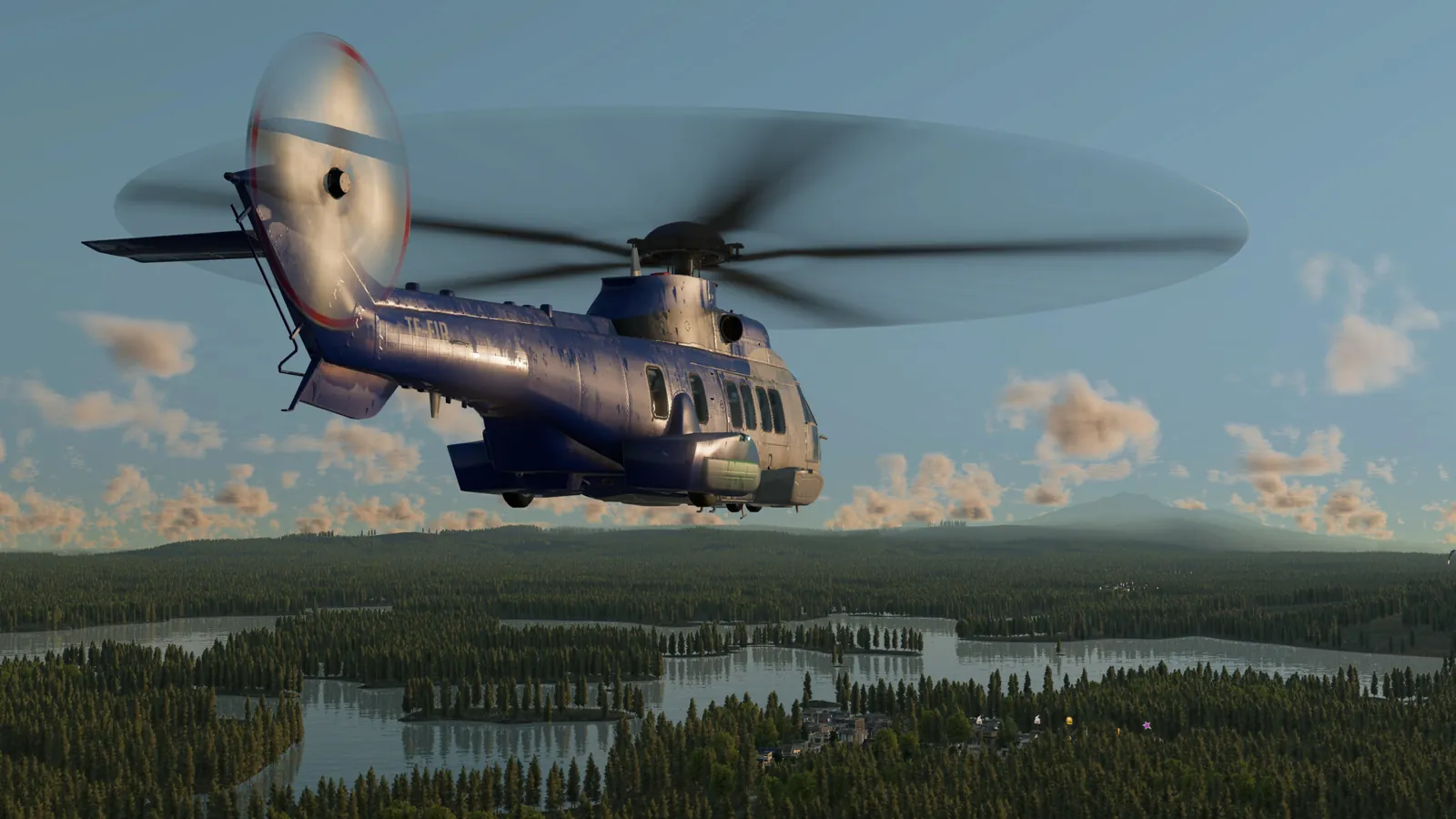
The Steam store page names helicopters among the vehicle types, in the same breath as trains, buses, trams, trucks, ships, and aircraft. That single line carries weight: helicopters are a full category in the 275+ roster, not a novelty unit.
Official source: Pre-purchase Transport Fever 3 on Steam
Exactly one helicopter model is individually named anywhere in official material: the Sikorsky S-76, included as one of the six Deluxe Edition legendary vehicles. No base-game helicopter model has been named, no stats have been published, and no dev blog has walked through helicopter mechanics specifically. The official vehicle trailer shows rotorcraft among the 270+ models, and early day-night cycle screenshots confirmed helicopters visually, but screenshots are not stats.
Official source: Vehicle Trailer
Preview chatter already asks the balance question out loud, with one early video literally titled around whether helicopters make things too easy. That is a healthy warning sign: a fast point-to-point passenger vehicle with minimal infrastructure could trivialize awkward geography, or it could be priced so brutally that it stays a niche toy. Both outcomes have series precedent with aircraft, and neither can be confirmed before launch.
Capacity, speed, range, running cost, infrastructure needs, and availability year are all unpublished. Any pre-launch verdict on helicopter strength is speculation. Keep rotorcraft out of your day-one money plan until numbers exist.
Where Helicopters Should Fit
Even without numbers, the map shapes that favor helicopters are obvious from the rest of the confirmed feature set. The game adds offshore oil platforms and fishing grounds, a subarctic climate with swamps and tundra, and towns whose citizens commute daily between home, work, and shops. Rotorcraft earn their keep wherever ground infrastructure is disproportionately expensive relative to the passengers: islands, mountain towns, rig-adjacent coastal cities, and far-flung suburbs that cannot fill a train.
| Use Case | Why a Helicopter Fits | Verification Status |
|---|---|---|
| Island passenger links | No bridge or tunnel bill | Role plausible, costs pending |
| Mountain town connections | Avoids expensive rail grading | Role plausible, costs pending |
| Coastal city to offshore sites | Short hop over water | Passenger role plausible; freight role doubted |
| Thin suburb commuter shuttles | Point-to-point without track | Role plausible, costs pending |
| Bulk freight | Nothing supports this | Do not plan for it |
The freight row needs emphasis. Series veterans discussing the announcement noted that helicopters will not serve as core cargo transport, and offshore industry coverage describes ships as indispensable for moving goods ashore. If you dream of supplying an oil rig by helicopter, park that dream: the confirmed offshore logistics story is ships, covered alongside the vehicle roster overview.
Official source: Transport Fever 3 Industries and Cargo Revealed
Helicopters vs Planes vs Fast Ground Links
Helicopters compete with small aircraft on short hops and with fast trains and cargo-capable tram corridors on city access. Aircraft need runways and cover distance; helicopters need far less ground footprint and cover awkwardness. That framing decides most matchups: distance favors planes, terrain favors rotorcraft, volume favors rail.
Noise is the hidden variable. TF3 towns react to noise, and a helicopter shuttle hammering a residential landing pad all day may trade passenger revenue for growth penalties. Noise barriers and routing are confirmed mitigation tools for ground transport, but whether equivalent dampening exists for helipads is unknown. Until someone tests it at launch, keep landing sites away from the residential districts your growth depends on.
Towns penalize noise, and rotorcraft are loud by nature. Site pads near commercial districts or transport hubs first, and only expand toward housing after launch testing shows the growth interaction.
A Sensible Pre-Launch Plan
Do not open your first company with helicopters. Open with proven ground money: a bus loop, a truck freight pair, or a simple train line laid out with the single-to-double-track signal progression. Once cash flow is safe and the depot stats are public, audition one helicopter on your single most awkward passenger link, measure profit per month against a bus or train alternative on similar distance, and only then decide whether rotorcraft deserve a fleet.
The Deluxe Edition Sikorsky S-76 complicates this slightly for Deluxe owners, since a free legendary helicopter tempts early use. A free vehicle still burns running costs and still needs demand underneath it. Fly it where passengers already queue, not where you hope they might appear.
Frequently Asked Questions
Are helicopters new to Transport Fever 3?
Yes. Earlier series entries had no rotorcraft category. Helicopters appear on the Steam store feature list as part of the 275+ roster, and the Sikorsky S-76 is a Deluxe Edition bonus vehicle.
Can helicopters carry cargo to oil rigs?
Nothing official supports that. Offshore industry coverage describes ships as indispensable for moving goods ashore, and community analysis expects helicopters to serve passenger links only. Treat helicopter freight as unconfirmed and plan offshore logistics around ships.
Is the Sikorsky S-76 worth the Deluxe Edition alone?
Impossible to say before stats exist. It is the only named helicopter so far, which makes it interesting, but a legendary label is not an economic argument. Judge it on capacity and running cost once the depot is readable.
Will helicopters break game balance?
Preview players are already asking. Fast point-to-point travel with light infrastructure could trivialize island and mountain maps, or costs could keep rotorcraft niche. The answer is pending launch verification and real profit-per-month testing.
When should I buy my first helicopter?
After your ground network turns a stable profit and depot stats are public. Audition one airframe on your most awkward short passenger link, compare against ground alternatives, and expand only on measured results.
More Transport Fever 3 Guides
How money works in Transport Fever 3: delivery income, running costs, full loads, and the route habits that turn thin lines profitable.
Transport Fever 3 landmarks grant area bonuses tied to headquarters and company rank. Confirmed landmarks, how bonuses work, and subsidy details still pending.
Transport Fever 3 loans and contracts explained: dynamic borrowing, risk-versus-reward deals, and rules for debt that builds instead of kills.
Transport Fever 3 mods run through an in-game browser with cross-platform support. Learn Curated Mods, mod.io, and Workshop status.
Cut noise and pollution in Transport Fever 3: barriers, trees, underground rail and fleet maintenance. Pre-launch guide.
Transport Fever 3 offshore oil and fishing guide: rigs, fishing grounds, ships and climate limits for sea supply chains. Pre-launch.
Fix Transport Fever 3 lag and stutter: graphics settings that help, CPU bottleneck advice, and late-game slowdown cures that work.
How Transport Fever 3 production chains work: 37 cargo types, boosters, deadlines and the canned food chain. Pre-launch guide.