
Transport Fever 3 adds a full day-night cycle with on-time cargo bonuses. How timetables, punctuality, and day-night play interact before launch.
Transport Fever 3 Timetable Guide: How Does the Day-Night Cycle Change Scheduling?
Quick answer: Transport Fever 3 introduces the series-first full day-night cycle with dynamic lighting, and punctual delivery now directly affects cargo value and town demand. A stronger line manager carries the scheduling load. The exact timetable interface is unpublished, so this page covers the confirmed incentives and the scheduling habits that exploit them, with interface details pending launch verification.
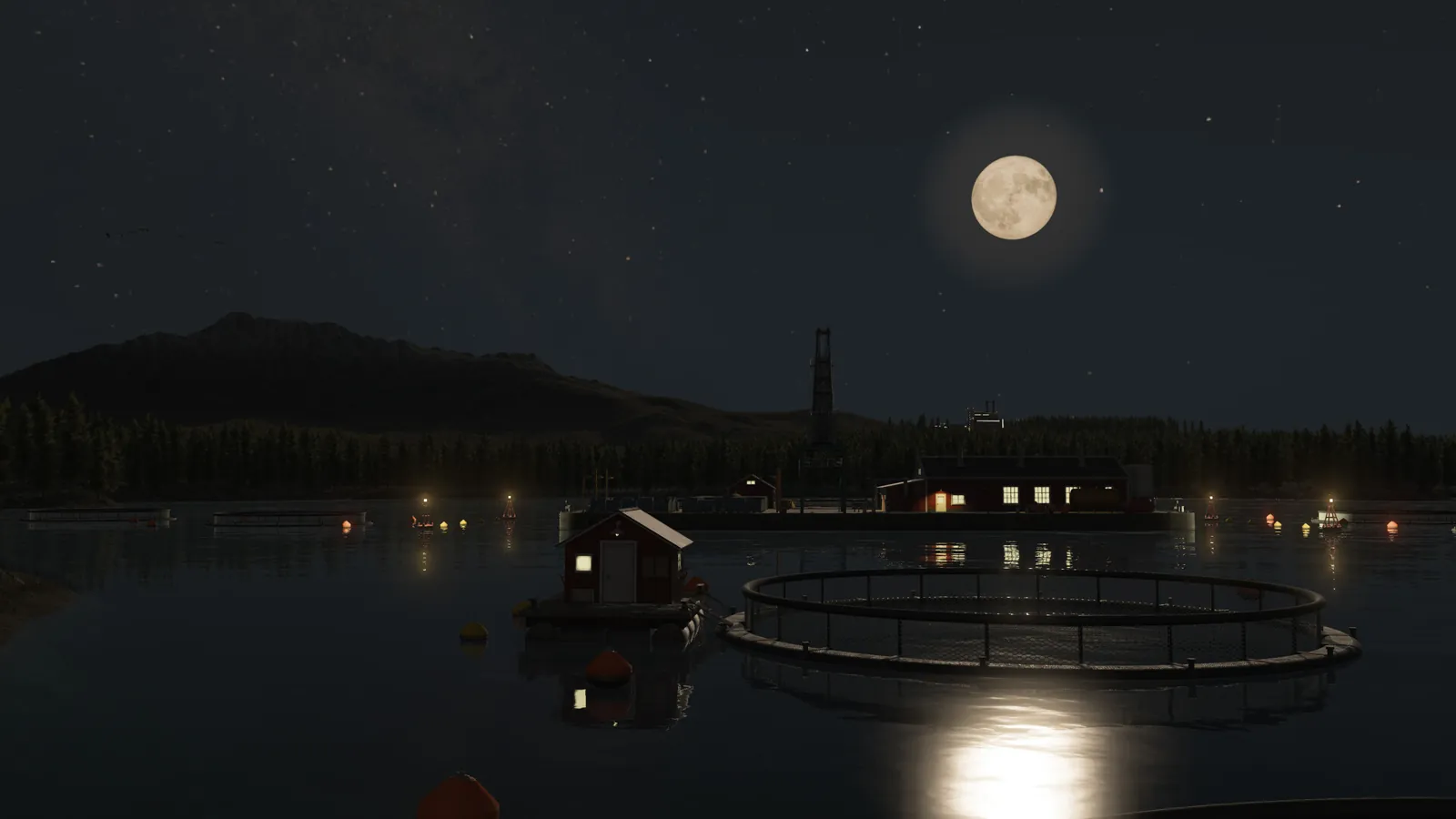
The Day-Night Cycle Is Real
For the first time in the series, TF3 ships with a fully featured day-night cycle including dynamic lighting and physical skies, alongside lane-specific traffic flow and dynamic weather. That sentence is confirmed across preview coverage and the official feature set, and early screenshots showed the cycle with helicopters in frame.
Official source: Dev Blog Episode 5: Highlights
The cycle is not cosmetic scenery. Citizens live daily routines, commuting between home, work, and shops, and towns rate factors that include on-time delivery. A game where people travel by time of day and freight pays by punctuality turns the clock into an economic input. Rush-hour demand should look different from night demand, which is precisely why scheduling matters more here than in any earlier series entry.
Player whishlist threads from the TF2 era predicted exactly this: timetables need a day-night cycle so peak service differs from night service, with out-of-service consists parked overnight. TF3 delivers the cycle; the scheduling tools that exploit it are confirmed only as an improved line manager so far.
Why Punctuality Pays Now
Two confirmed mechanics make lateness expensive. First, cargo value depends on complexity and on whether delivery is on time. Second, one of the town needs is on-time delivery itself, with short deadlines for food and long ones for coal and stone. A late food train loses twice: the cargo pays less and the town notices.
Official source: Transport Fever 3 Industries and Cargo Revealed
The fashion-goods mechanic sharpens the point further: preview coverage of the highlights material describes on-time delivery of fashion cargo as a dedicated system. High-value, time-sensitive goods reward reliable scheduling disproportionately, which inverts the old habit of running everything at identical frequency. Fast, punctual lines for clothes and food plus slow bulk rhythms for coal and stone is the shape the incentives point at.
| Cargo | Deadline Pressure | Scheduling Implication |
|---|---|---|
| Food | Short | Frequent, punctual passenger-style rhythms |
| Fashion goods | Short, dedicated on-time system | Priority consists, protected from congestion |
| Industrial inputs | Medium | Steady cadence matched to production boosters |
| Coal and stone | Long | Slow bulk runs, lowest scheduling priority |
Production boosters add a second clock. Moving workers and special inputs like fertilizer to farms raises output, which means the workforce commute and the input deliveries both run on schedules that the production cycle rewards. A line that arrives whenever it feels like it leaves booster money on the table.
Scheduling Habits That Exploit the Clock
Without the interface in hand, the durable advice is about structure, not buttons. Separate fast and slow traffic wherever they share track, because a bulk coal drag ahead of a fashion-goods express destroys exactly the punctuality the game now pays for. The single-to-double-track signal progression is the physical half of this; timetable separation is the temporal half.
Stagger departures so vehicles do not bunch at terminals, and keep consists matched to the demand slice they serve: commuter peaks get capacity, night hours get skeleton service or parked consists, and freight gets windows where passenger peaks will not trap it behind station queues. The improved line manager is confirmed to be stronger than its predecessors, and data layers for congestion and delivery hotspots are confirmed for diagnosing trouble, so the tools for this exist even if their buttons are still unseen.
Official source: Pre-purchase Transport Fever 3 on Steam
Vehicle choice interacts with scheduling too. The full category roster gives you speed options per era, and cargo trams offer night-shiftable urban freight that keeps noisy trucks out of sleeping districts. None of that needs interface details to plan around.
Give short-deadline goods their own consists and their own paths. Mixing fashion goods behind a coal drag on shared track converts your highest-margin freight into late delivery penalties.
What Remains Unconfirmed
The honest list is long. Whether TF3 has an explicit timetable editor with departure slots, dwell times, and day-night profiles is unknown. How night hours affect demand curves numerically is unknown. Whether vehicles can be parked or mothballed overnight, how driver or crew costs interact with idle time, and how the line manager exposes all of this are all pending launch verification. The previous game needed a community mod for real scheduling, and no official source has said how far past that baseline TF3 goes natively.
Everything about buttons, timetable slots, and scheduling automation awaits the release build. The incentives (on-time pay, day-night demand) are confirmed; the controls are not. Do not memorize workflows from speculation.
Day-night visuals themselves raise a practical question nobody has answered: does the cycle run on a fixed clock or scale with game speed, and can it be paused or disabled for players who find night operations fiddly? Both behaviors have genre precedent. Expect the answer within days of launch and plan your first campaign starts for daytime learning hours regardless.
Frequently Asked Questions
Does Transport Fever 3 have a day-night cycle?
Yes, for the first time in the series, with dynamic lighting, physical skies, and dynamic weather. It is confirmed across the official feature set and preview coverage, and citizens follow daily home-work-shop routines inside it.
Does Transport Fever 3 have timetables?
An improved line manager is confirmed, but no explicit timetable editor has been shown. Scheduling-adjacent systems (on-time cargo pay, day-night demand, data layers) are confirmed. Interface specifics are pending launch verification.
Why does on-time delivery matter now?
Cargo value scales with punctuality, towns list on-time delivery among their needs, and fashion goods get a dedicated on-time mechanic. Food has short deadlines while coal and stone allow long ones, so lateness costs real money on premium goods.
Should I run fewer vehicles at night?
Probably, once demand curves are known. The confirmed day-night cycle plus citizen routines strongly implies thinner night demand, and parking consists overnight matches both realism and cost control. Exact numbers are pending launch verification.
How do I prepare scheduling before launch?
Learn the physical half now: clean one-way signaling and the single-to-double-track upgrade path. When the interface lands, you will only need to learn buttons, not traffic theory.
More Transport Fever 3 Guides
Helicopters are new in Transport Fever 3, with the Sikorsky S-76 confirmed. What they are good for, what they cannot do, and costs still unconfirmed.
How money works in Transport Fever 3: delivery income, running costs, full loads, and the route habits that turn thin lines profitable.
Transport Fever 3 landmarks grant area bonuses tied to headquarters and company rank. Confirmed landmarks, how bonuses work, and subsidy details still pending.
Transport Fever 3 loans and contracts explained: dynamic borrowing, risk-versus-reward deals, and rules for debt that builds instead of kills.
Transport Fever 3 mods run through an in-game browser with cross-platform support. Learn Curated Mods, mod.io, and Workshop status.
Cut noise and pollution in Transport Fever 3: barriers, trees, underground rail and fleet maintenance. Pre-launch guide.
Transport Fever 3 offshore oil and fishing guide: rigs, fishing grounds, ships and climate limits for sea supply chains. Pre-launch.
Fix Transport Fever 3 lag and stutter: graphics settings that help, CPU bottleneck advice, and late-game slowdown cures that work.