
How Transport Fever 3 production chains work: 37 cargo types, boosters, deadlines and the canned food chain. Pre-launch guide.
Transport Fever 3 Production Chains: How Do the 35+ Industries Fit Together?
Quick answer: Transport Fever 3 ships with over 35 industries and 37 confirmed cargo types across four handling categories, and towns pull new links of the chain onto the map as they grow. Output can be pushed higher by delivering workers and special inputs like fertilizer, but every load now runs against a per-cargo delivery deadline. Exact ratios and throughput numbers are still pending launch verification, since the game releases September 29, 2026.
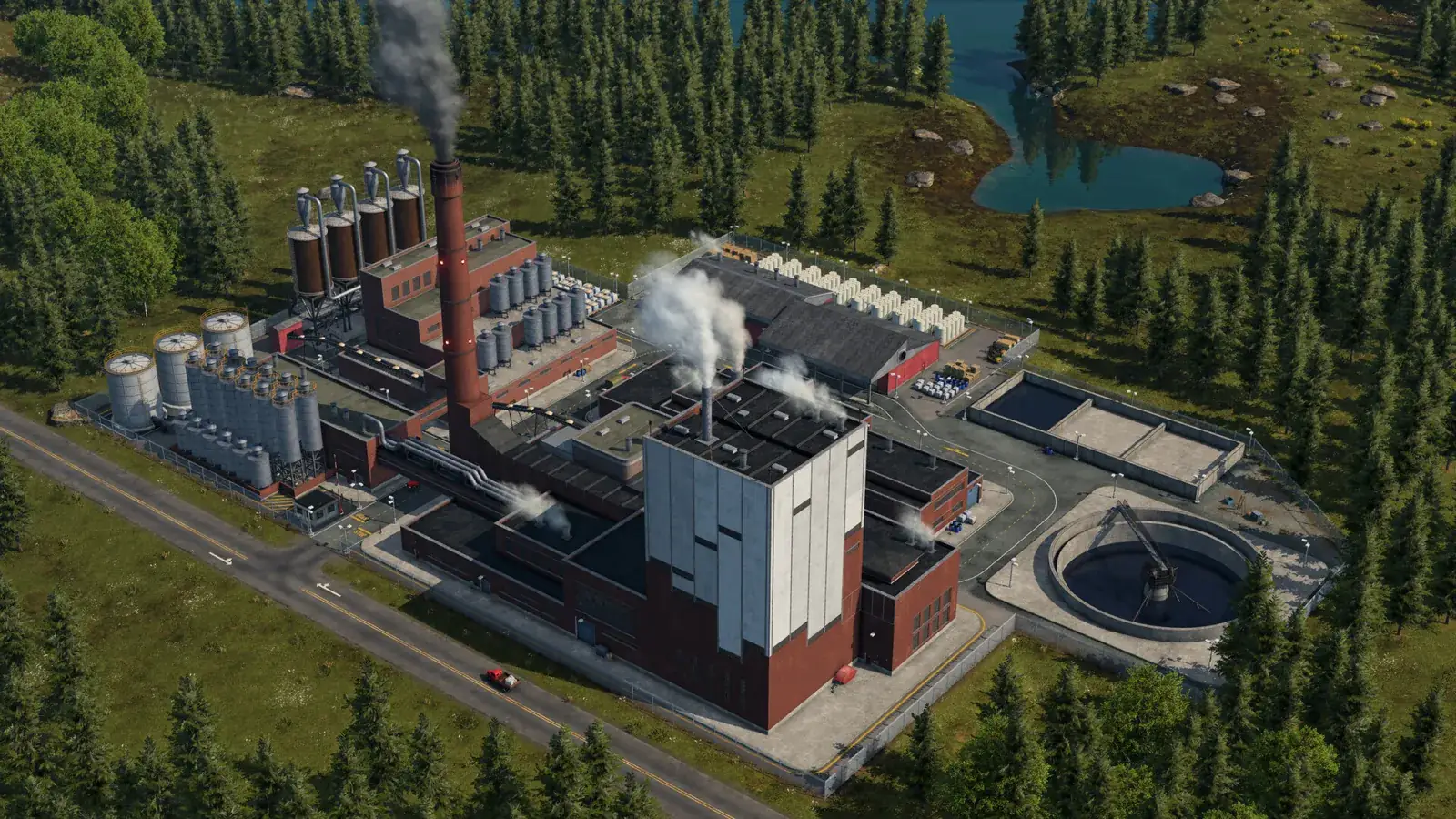
Why chains feel different from Transport Fever 2
Veterans remember the old rhythm: connect a supplier, connect a consumer, then watch the cargo sort itself out. That loop is gone. Urban Games rebuilt the cargo simulation so freight has no preset destination when it leaves the factory gate. It waits at its point of origin until your network picks it up, and you decide where each load goes, leg by leg.
Official source: Dev Blog Episode 2: Industries and Cargo
That single change ripples through every decision. A steel mill no longer auto-feeds the nearest machine factory. If you want that steel moved, you assign it, and if a better-paying destination appears across the map, you reroute. Players coming from TF2 should read Cargo Not Moving? Fix Loading Issues early, because most "broken chain" reports turn out to be someone waiting for cargo that was never told where to go.
Industries also react to the world now. Towns start out asking for simple stuff, fish, vegetables, planks, and only the industries needed for those goods exist on the map at first. As settlements climb toward metropolis size they demand larger volumes plus up to six complex end products, and the missing factories pop up dynamically, which forces you to rebuild routes you thought were finished. Sandbox players can override placement freely, but in a normal game the map keeps moving under your feet.
The four cargo categories and 37 cargo types
Every cargo belongs to one of four handling categories. The category decides how freight is stored, which vehicles can carry it, and which stations and warehouses handle it fastest. Matching all three, vehicle, station, warehouse, to the same category stacks the speed bonus, at the price of higher cost and more noise and pollution.
| Category | Examples | Stored in | Carried by |
|---|---|---|---|
| Liquid | Oil, fuel | Tanks, barrels | Tankers |
| Bulk | Sand, grain | Silos, heaps | Open wagons, open trucks |
| Flatbed | Logs, steel | Open storage, cranes | Flat vehicles |
| Goods | Canned food, glass | Freight sheds | Closed vehicles |
Universal vehicles exist for the early game and can haul anything, but they load and unload slower than specialists. The same tradeoff applies on the ground: a universal loading station is cheap, clean, quiet, and flexible, while a specialized platform for one category screams through loading at the cost of higher expenses and extra emissions. Before launch, nobody outside the beta has published exact loading-rate numbers, so treat any "X units per minute" table you see elsewhere as pending launch verification.
Run cheap universal trucks and stations on a new chain until the volume proves itself. Once queues form at the factory gate, that is the signal to upgrade to specialized vehicles and platforms on that route only, instead of gold-plating every line on day one.
One honest numbers note: the Steam store page promises over 35 unique industries, while the August 2025 press kit quoted 32 industry types and 37 cargo types, and a February 2026 hands-on preview reported 35 industries and 40 cargo types. The discrepancy probably comes from counting climate-specific variants differently. This page uses the latest official wording, over 35 industries and 37 cargo types confirmed in the dev blog, and flags the "40" figure as pending launch verification.
Official source: Transport Fever 3 on Steam
Demand pulls new industries onto the map
The old games spawned a fixed industry set and left you to connect the dots. Here, demand leads and supply follows. Each town's size sets the quantity and sophistication of what it wants, and complex end products drag their whole upstream chain into existence: the games press release gives books as an example, which need paper mills plus printing presses before a single copy can ship.
Climate zones shape which chains are even possible. Fisheries do not exist in deserts, meat and fish availability varies between arid, subarctic, and other zones, and some goods can only be produced with the inputs your region actually has. The offshore guide covers the water side of this in detail: Offshore Oil and Fishing Guide.
Practically, this means scouting matters more than it used to. Before committing to a ten-year rail project, check which inputs exist in your region and which end products the nearby towns will actually want at their next growth tier. Chains that look profitable on paper die when a key raw material only spawns two regions away.
Production boosters: workers, fertilizer, tools
When a factory cannot keep up with demand, you now have two levers besides building a second factory. Deliver workers from nearby towns to raise output across the board, and feed resource industries their favorite input: fertilizer for farms, tools or machine parts for mines. Both boosters cost you extra infrastructure and extra traffic, so the math is output gained versus capacity spent.
| Booster | Goes to | Official example |
|---|---|---|
| Workers | Any industry falling behind | Commuters from a nearby town |
| Fertilizer | Farms | Grain and produce farms |
| Tools | Mines | Ore and stone mines |
| Machine parts | Mines | Higher-tier extraction |
The dev blog is explicit that boosters only pay off if your lines can carry the extra volume. A boosted farm with a one-truck dirt road just moves the bottleneck to the loading dock, which is why booster planning and warehouse planning belong together. See Warehouses and Terminals Guide for the storage side of that equation.
Urban Games warns that pushing production higher raises the environmental footprint around the industry. Near a growing town that extra pollution can drag down the very growth rating you were trying to feed, so check the town happiness layers before boosting a supplier next door.
Delivery deadlines change what "fast" is worth
Each cargo type now carries an expected delivery time. Food is time-critical with a short fuse, while bulk goods like stone tolerate slow trips. Miss the window and the load still earns revenue, but the destination town's delivery rating drops, which throttles the experience points that drive city growth. Full payment mechanics deserve their own page, so the money math lives at Cargo Payment Explained.
For chain planning, the takeaway is simple: match vehicle speed to cargo patience. Slow barges suit stone and coal, while fish and fresh food want the fastest link you can afford. The developers confirmed in the Episode 4 comments that distance-based parking of money routes is dead; payment now keys off cargo complexity instead, which rewards deep multi-stage chains over one absurdly long coal drag.
Official source: Dev Blog Episode 4: Tycoon
Worked example: the canned food chain
Canned food is the official showcase of a multi-stage end product, and it demonstrates every system on this page at once. Big towns demand it. Every can needs tinplate as the base, plus a filling you choose: meat, fish, or a mix. That choice is climate-locked, since arid zones have no fish farms, and both meat and fish are also demanded directly by cities, which sets up genuine competition for the same raw output. Tinplate itself needs upstream supply, so the full chain runs several industries deep.
A sensible build order looks like this: first serve the town's basic food demand with whatever single-input chain is local, then secure tinplate supply, then add the meat or fish leg, and only then connect the cannery. Boost the farm with fertilizer once the cannery starts starving, and watch the delivery deadline on the finished cans, because late cans pay cash but stall the town level you built the whole thing for.
Official source: Industries and Cargo Revealed on Games Press
Frequently Asked Questions
How many industries and cargo types does Transport Fever 3 have?
The Steam page confirms over 35 unique industries, and the Episode 2 dev blog confirms 37 cargo types in four handling categories. A February 2026 preview mentioned 40 cargo types, but Urban Games has not published a full itemized list, so treat the exact final count as pending launch verification.
Do I still need to match supply ratios like in Transport Fever 2?
No fixed ratios have been published. Chains are demand-driven: towns request quantities that grow with size, industries appear as needed, and boosters flex output up or down. Any guide quoting exact input-output ratios before launch is guessing.
Which production chain should a beginner build first?
Pick whatever the nearest town demands at game start, usually fish, vegetables, or planks, since those need a single short link. Get cash flowing before touching multi-stage goods like canned food or books, and keep the first route universal-vehicle friendly so you can reuse the trucks elsewhere.
Do boosted industries pollute more?
Yes, according to the dev blog. Higher output comes with higher environmental impact around the site, which can hurt nearby town ratings. Boost remote suppliers freely, but think twice before supercharging a farm pressed against a residential district.
Will my old Transport Fever 2 chain layouts still work?
The concepts transfer but the layouts mostly do not. Cargo no longer self-routes to destinations, loading works through catchment stations and specialized platforms, deadlines punish slow legs, and payment rewards complexity over distance. Expect to redesign rather than copy-paste.
More Transport Fever 3 Guides
Helicopters are new in Transport Fever 3, with the Sikorsky S-76 confirmed. What they are good for, what they cannot do, and costs still unconfirmed.
How money works in Transport Fever 3: delivery income, running costs, full loads, and the route habits that turn thin lines profitable.
Transport Fever 3 landmarks grant area bonuses tied to headquarters and company rank. Confirmed landmarks, how bonuses work, and subsidy details still pending.
Transport Fever 3 loans and contracts explained: dynamic borrowing, risk-versus-reward deals, and rules for debt that builds instead of kills.
Transport Fever 3 mods run through an in-game browser with cross-platform support. Learn Curated Mods, mod.io, and Workshop status.
Cut noise and pollution in Transport Fever 3: barriers, trees, underground rail and fleet maintenance. Pre-launch guide.
Transport Fever 3 offshore oil and fishing guide: rigs, fishing grounds, ships and climate limits for sea supply chains. Pre-launch.
Fix Transport Fever 3 lag and stutter: graphics settings that help, CPU bottleneck advice, and late-game slowdown cures that work.