
Cut noise and pollution in Transport Fever 3: barriers, trees, underground rail and fleet maintenance. Pre-launch guide.
How Do You Beat Noise and Transport Fever 3 Pollution?
Quick answer: Noise and pollution are two of the six city ratings, and low scores directly shrink the experience multiplier that levels towns up. Cut them with noise barriers, tree-lined streets, underground rail, greenification, pollution plants, cleaner vehicles, and disciplined maintenance, while keeping dirty infrastructure away from housing. Exact radii, absorption values, and thresholds are still pending launch verification ahead of release on September 29, 2026.
Why the environment gates your growth
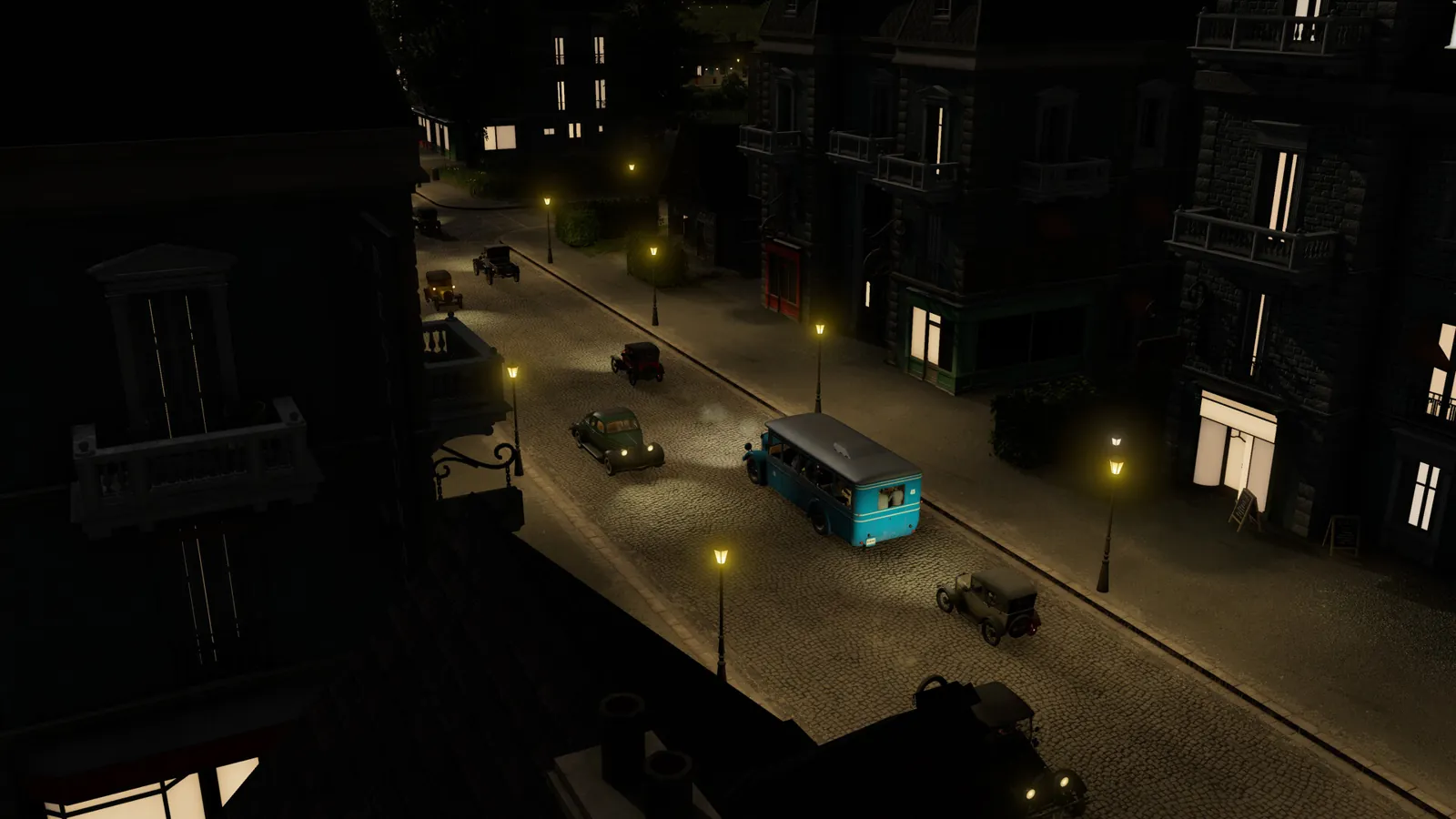
Towns in TF3 evaluate their own well-being across six ratings, and noise plus pollution are the two that punish ambitious builders hardest. Every station, hub, highway, and factory you place emits one or both, and low values cap the growth factor that converts deliveries into level-up experience. A town can receive perfect supply and still stagnate under a brown haze next to a screaming freight yard.
Official source: Dev Blog Episode 4: Tycoon
The cruel twist is that growth creates the problem. Bigger towns mean more traffic, more infrastructure, and more emissions, exactly when each new level demands the most XP. Veteran city painters who slap a grand terminus in the town square and ring it with industry will watch their showcase city choke. The growth mechanics behind the multiplier are explained at City Growth Explained.
Pollution accounting is area-wide, not border-local. Because emissions are tallied across the entire municipal area, parking a steel mill one street outside the town sign fools nobody. Plan at regional scale or do not bother.
Where noise and pollution come from
Sources split into three buckets, and each wants a different answer. Fixed facilities radiate constantly, vehicles pollute along every kilometer they travel, and your own construction choices set the baseline for both.
| Source | Emits | What helps most |
|---|---|---|
| Specialized stations and platforms | Noise plus extra emissions | Site away from housing, barrier walls |
| Industries and boosted production | Mostly pollution, some noise | Minimal footprint, efficient use, green buffers |
| Road and rail traffic | Noise plus exhaust along routes | Quiet vehicles, trams, underground rail |
| Neglected unmaintained vehicles | Extra noise and pollution | Maintenance within facility range |
| Demolition and deforestation | Reputation damage plus lost buffers | Build lightly, replant trees |
Two underappreciated entries deserve highlighting. First, specialization has an environmental price tag: the fast platforms and specialist vehicles that supercharge throughput explicitly raise emissions and noise, so every speed upgrade is also a ratings decision. Second, maintenance is new as a pressure: vehicles serviced automatically within range of proper facilities stay clean and quiet, while neglected fleets slow down and get louder and dirtier. Rolling stock you forget about becomes a moving smokestack.
Official source: Tycoon Gameplay Overview press release
Specialized loading platforms, high-throughput hubs, and boosted industries all trade environmental goodwill for speed. Never place your fastest freight assets against a residential district without barriers and distance, or the ratings loss can erase the throughput gain.
The mitigation toolkit, confirmed so far
Urban Games has confirmed a concrete set of counters, and they stack. Noise barriers shield housing from tracks and roads. Tree-lined streets and replanted forests absorb impact and repair reputation damaged by earlier demolition. Underground railways remove surface noise from dense districts at a construction premium. Greenification and dedicated pollution plants appear in the official toolkit for struggling municipalities. Company progression adds more: ranking up unlocks pollution reduction measures alongside headquarters upgrades and landmark bonuses.
Tactics matter as much as tools. Short routes to a noisy downtown station versus a quiet outskirts hub with clean last-mile links is presented by the developers as a genuine dilemma, not a quiz with one right answer. The downtown option saves travel time and pleases the satisfaction rating; the outskirts option protects noise at the cost of time and extra maintenance. Read your town's weakest rating and let it pick.
Open the town panel before building. Noise deep in the red means barriers and rerouting first. Pollution red means cleaner fleet and less footprint first. Fixing the wrong one feels productive and achieves nothing.
Fleet choice belongs in every mitigation plan. The overhauled purchase menu shows noise and pollution attributes per vehicle with a comparison mode, and older models sometimes beat the shiny newcomer on exactly these stats. Quiet buses and trams for street running, cleaner engines for town-adjacent industry links, and the dirtiest heavy haulers restricted to remote corridors form the basic doctrine. Broader money questions around fleet renewal sit with How to Make Money.
Layout patterns that keep ratings green
Three spatial habits prevent most environmental pain. First, separate by function: keep heavy freight terminals, boosted industries, and highways at arm's length from housing, and connect the gap with quiet links. Second, build minimally. The dev blog explicitly rewards lean infrastructure used efficiently, so one well-loaded double-track line beats three half-empty ones on every rating at once. Third, electrify the street layer. Trams move crowds with a fraction of the noise and fumes of equivalent bus or car traffic, which is why the street-running guide pairs naturally with this one: Trams, Light Rail and Cargo Trams.
Data layers are your inspection tool. Noise and delivery layers visualize hotspots directly, and the Episode 5 UI floats unhappy-citizen markers in the world where waits or conditions turn bad. Fly the layers after every major build and treat new red blobs as punch-list items, not scenery.
Official source: Transport Fever 3 on Steam
Subsidies and landmarks can tilt the balance further. Completing contracts and placing landmarks grants regional perks, some of which touch pollution and growth directly. Whether a given bonus beats simply building cleaner is a case-by-case call covered at Landmarks and Subsidies Guide. And if the red blobs persist while frames drop too, the problem may be scale itself rather than layout; check Performance and Lag Fix before blaming your planning.
Frequently Asked Questions
Does pollution really stop towns from growing?
It slows them, sometimes drastically. Pollution is one of six ratings scaling the XP multiplier, so dirty towns convert the same deliveries into fewer level-ups. It never hard-locks growth, but it can make high tiers take several times longer.
Do noise barriers actually work, or are they decoration?
They are confirmed mitigation in the official toolkit alongside tree-lined streets, underground rail, greenification, and pollution plants. Exact absorption numbers are pending launch verification, but barriers are a real mechanic, not scenery.
Should stations go downtown or on the outskirts?
Both are viable and the developers frame it as a tradeoff. Downtown saves travel time and boosts satisfaction; outskirts protect noise but cost time and maintenance. Match the choice to whichever rating is currently weakest.
Do old vehicles pollute more than new ones?
Not automatically by age, but neglected vehicles definitely get louder and dirtier, and the purchase menu shows per-vehicle noise and pollution stats where older models sometimes win. Maintain everything within facility range and compare stats instead of assuming newest equals cleanest.
What environmental numbers are still unknown?
All precise ones: emission radii, barrier absorption values, per-vehicle pollution figures, rating weights, and threshold breakpoints. The sources, tools, and tradeoffs above are official; every number is pending launch verification after September 29, 2026.
More Transport Fever 3 Guides
Helicopters are new in Transport Fever 3, with the Sikorsky S-76 confirmed. What they are good for, what they cannot do, and costs still unconfirmed.
How money works in Transport Fever 3: delivery income, running costs, full loads, and the route habits that turn thin lines profitable.
Transport Fever 3 landmarks grant area bonuses tied to headquarters and company rank. Confirmed landmarks, how bonuses work, and subsidy details still pending.
Transport Fever 3 loans and contracts explained: dynamic borrowing, risk-versus-reward deals, and rules for debt that builds instead of kills.
Transport Fever 3 mods run through an in-game browser with cross-platform support. Learn Curated Mods, mod.io, and Workshop status.
Transport Fever 3 offshore oil and fishing guide: rigs, fishing grounds, ships and climate limits for sea supply chains. Pre-launch.
Fix Transport Fever 3 lag and stutter: graphics settings that help, CPU bottleneck advice, and late-game slowdown cures that work.
How Transport Fever 3 production chains work: 37 cargo types, boosters, deadlines and the canned food chain. Pre-launch guide.